

 Visit JCPC
Stenner (Appellant) v Teignbridge District Council (Respondent)
Case summary
Case ID
UKSC/2025/0164
Parties
Appellant(s)
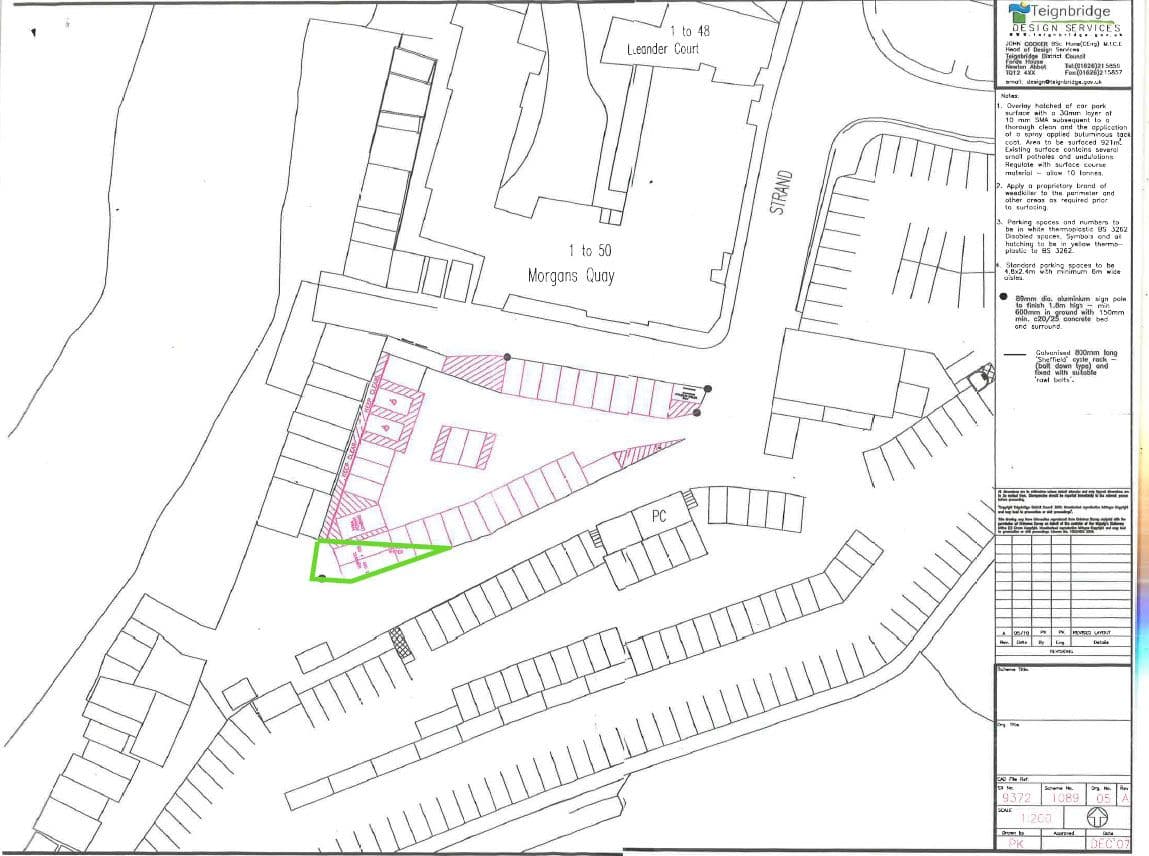
Peter Stenner
Respondent(s)
Teignbridge District Council
Judgment details
Judgment date
25 November 2026
Neutral citation
[2026] UKSC 38
Hearing dates
Start date
22 July 2026
End date
22 July 2026
Justices


Judgment details
Michaelmas Term 2026
[2026] UKSC 38
LORD SALES AND LORD HAMBLEN (with whom Lord Burrows, Lady Simler and Lord Snowden agree):
1. Introduction
1. An easement is a proprietary right over the land of another, such as a right of way. The land which has the benefit of the right is known as the dominant tenement and its owner as the dominant owner. The land which is subject to the right is known as the servient tenement and its owner as the servient owner.
2. The essential characteristics of an easement have authoritatively been stated to be: (i) there must be a dominant and a servient tenement; (ii) the easement must accommodate the dominant tenement; (iii) the dominant and servient owners must be different persons; (iv) a right over land cannot amount to an easement, unless it is capable of forming the subject matter of a grant. For these four requirements, see Regency Villas Title Ltd v Diamond Resorts (Europe) Ltd [2018] UKSC 57, [2019] AC 553 per Lord Briggs at para 35 (“Regency Villas”), citing In re Ellenborough Park [1956] Ch 131 and Dr Cheshire’s identification of these key characteristics (see p 163).
3. Included within the fourth condition is what has been termed “the ouster principle”. This is the principle that “the right is not so extensive or invasive as to oust the servient owner from the enjoyment or control of the servient tenement” – per Lord Briggs in Regency Villas at para 58.
4. This appeal is concerned with the ouster principle and, in particular, whether the test for its application is whether the claimed easement right “is such that it would leave the servient owner without any reasonable use of his land”. This test is derived from the judgment of HHJ Paul Baker QC in London & Blenheim Estates Ltd v Ladbroke Retail Parks Ltd [1992] 1 WLR 1278 (“London & Blenheim Estates”) as applied by the Court of Appeal in Batchelor v Marlow [2001] EWCA Civ 1051; [2003] 1 WLR 764. It is the test which both the First-tier Tribunal (Property Chamber) (“FTT”) and the Upper Tribunal (Lands Chamber) (“UT”) considered that they were bound to apply in the present case. The UT granted a leapfrog certificate under section 14A of the Tribunals, Courts and Enforcement Act 2007 (“the 2007 Act”) so that this court could consider the correctness of this test.
2. Factual background
5. The appellant, Mr Stenner, is the registered freehold proprietor of three beach huts (“the Beach Huts”) located close to the beach where the River Teign meets the sea at the Point in Teignmouth, Devon.
6. The respondent, Teignbridge District Council, is the registered freehold proprietor of a substantial area of land at the southern tip of the promontory which extends southward on the northern side of the mouth of the River Teign (“the respondent’s land”). The respondent’s land includes a car park (“the Car Park”), which is adjacent or near to the Beach Huts. The Beach Huts are, amongst other titles, within the curtilage of, and effectively carved out of, the respondent’s land.
7. The land which is the subject matter of the claim is a narrow triangle of the Car Park adjacent to the beach on which the Beach Huts are located (“the Triangle”). The Triangle is just to the north of the Beach Huts and at the western side of the Car Park. Annexed to the judgment is a plan on which the Triangle is marked edged in green.
8. The Triangle contains sufficient space to park up to four cars on it. The Car Park as a whole has capacity for 34 cars.
9. The appellant runs a boat hire business from the Beach Huts called “Teign Boat Hire” which he took over in 1982. Before that, the business was run by one Sydney Back who had purchased it in 1962 from his father-in-law, Fred Drew, who was running the business from around 1946. The appellant worked there from 1970 and then bought the business from Mr Back.
10. The business is largely cyclical; the summer holiday season runs from the start of May to the end of September. During these summer months the boats are stored on moorings when not in use so boat storage space is only required during the off-season which is between 1 October and 31 May.
11. The appellant claims that since 1982 he has used the Triangle for the purpose of carrying out maintenance and repairs on up to six of the boats used in connection with his business and to store them along with related equipment during those winter months.
12. The Triangle was bounded on one side by white boundary stones and alongside these stones, metal railings. At some stage the boundary stones were tarmacked over and replaced by a blue line.
13. When the boats are stored on the Triangle, they are elevated on blocks so that any necessary maintenance, repairs and painting can be carried out. Unless they need to be moved elsewhere for specialist repairs, the boats are stored continuously on the Triangle during the off-season. The FTT held that, with up to six boats stored on the Triangle during the off-season, it would not be possible for the respondent to paint, re-surface or erect fencing within it and there would be no space available for the storage of boats belonging to others. During the off-season, whilst it is impossible for cars to be parked on the Triangle, it is possible for pedestrians, should they wish, to pass over it, threading passage through the stored boats. During the summer season, the Triangle is clear and can be (and is) used for car parking.
14. The appellant claims a prescriptive easement (broadly, continuous user as of right for 20 years) to store boats and equipment on the Triangle and to carry out maintenance thereon every year during the period from 1 October to 31 May (“the Disputed Easement”). He duly applied to the Land Registry to register the benefit and the burden of the Disputed Easement on the titles to the Beach Huts and the respondent’s land.
3. The judgments below
15. The FTT (Judge Green), in a written judgment dated 30 October 2024, held: (i) the appellant had established continuous yearly use of the Triangle, since 1982, for the storage of up to six boats during the period from October to May being the winter months when the boats were laid up; (ii) the appellant’s user had been as of right, sufficiently continuous and, save for the application of the ouster principle, he had satisfied all conditions for the establishment of the Disputed Easement; (iii) the test of no reasonable use set out in Batchelor v Marlow was binding on the FTT and was the correct test for gauging whether the ouster principle was engaged; and (iv) applying that test, the respondent would be left with no reasonable use of the Triangle because “for the period October to May … the storage of six boats, leaving no room for anything else, would give [the appellant] exclusive use [of the Triangle] ... during that period”. The test was applicable in relation to the particular periods when the appellant claimed to be able to place boats on the Triangle, and he could not succeed in his claim by pointing to the ability of the respondent to make use of the land at other times of the year. The FTT accordingly concluded that the appellant’s claim to the Disputed Easement failed.
16. The appellant appealed to the UT. In a written judgment dated 26 June 2025, the President of the Lands Chamber, Edwin Johnson J, dismissed the appeal. As was common ground, he held that the FTT was correct to apply the no reasonable use test set out in Batchelor v Marlow. He concluded that it had not been shown that the FTT had made some significant error or was otherwise plainly wrong in its application of this test to the facts. Like the FTT, the judge took the view that the no reasonable use test was to be applied in relation to the particular periods when the appellant claimed to be able to place boats on the Triangle, rather than having regard to the whole year (which would include a period when the respondent was able to make reasonable use of the land).
17. The appellant applied for a certificate for a leapfrog appeal pursuant to section 14A of the 2007 Act which was granted by Edwin Johnson J in a decision given on 14 August 2025. His reasons for so concluding were as follows (para 8):
“In my view the point of law [regarding the application of the test in Batchelor v Marlow] is one of general public importance, for at least three reasons. First, and most obviously, the ouster principle is most likely to be encountered in relation to disputes over rights of parking and rights of storage. Such rights are commonly granted or claimed. They are widespread and of importance to the public. Second, the ouster principle has been the subject of criticism by the House of Lords in Moncrieff v Jamieson [2007] UKHL 42, [2007] 1 WLR 2620. It is not in the public interest that this area of the law should be left in a state where it has been criticised by the House of Lords, but has neither been overruled or affirmed by the Supreme Court. Third, the abolition of the ouster principle has been recommended by the Law Commission, but has not been implemented.”
18. On 10 September 2025, the appellant applied to the Supreme Court for permission to appeal and on 27 November 2025 the Supreme Court granted permission and approved the leapfrog from the UT.
4. The Issues
19. The principal issue on this appeal is:
Whether the test for the “ouster principle”, as set out in Batchelor v Marlow, which asks whether the claimed right would leave the servient owner without any reasonable user of the servient land, should be replaced by a test which asks whether the claimed right would deprive the servient owner of: (i) lawful possession and (subject to reasonable exercise of the right in question) control of the servient land, alternatively, (ii) exclusive possession of the servient land, or (iii) some other and, if so, what test?
20. The appellant also raises an alternative ground of appeal: if the test under the ouster principle is as formulated by the FTT and the UT, did they err in the application of that test, in particular by applying it only by reference to the period during which the rights in the Disputed Easement are exercisable (May to October), rather than by reference to the whole year?
5. The parties’ cases
21. The appellant contends that the ouster principle as set out in Batchelor v Marlow is the wrong legal test. The proper test is “whether the servient owner retains possession and, subject to the reasonable exercise of the right in question, control of the servient land” (per Lord Scott of Foscote in Moncrieff v Jamieson [2007] UKHL 42; [2007] 1 WLR 2620 at para 59), or, as suggested by the Law Commission in Chapter 3 of its 2011 Report Making Land Work: Easements, Covenants and Profits à Prendre (Law Com No 327) (“the Law Commission Report” or “the Report”), whether the servient owner retains exclusive possession. Had the UT (and the FTT before it) applied the correct test, then it would, and should, have held that the right claimed by the appellant was an easement recognised by law.
22. The appellant further submits that the tests propounded by Lord Scott in Moncrieff v Jamieson and that suggested by the Law Commission are two formulations of the same question, namely whether, given the putative easement, the servient owner retains legal possession of the land. Legal possession encompasses both control (subject to the reasonable exercise of the right) and the ability to exclude others from the land.
23. The respondent contends that the ouster principle, as presently formulated in Batchelor v Marlow, is well settled, is not operative of injustice, is consistent with the law in relation to easements generally and admits sufficient analysis of the facts to enable just decisions.
24. Alternatively, at most, qualification of the principle is all that is required. The appropriate qualification would be to add the requirement that for the ouster principle to apply it is also necessary to show that the servient owner’s ownership of the servient land would be rendered illusory.
25. The respondent further contends that to frame the test as being whether the servient owner retains legal or exclusive possession of the servient land is artificial, unworkable and will be operative of injustice. It overlooks the proposition that a right claimed might exceed that of an easement but not be sufficient to make out a claim for adverse possession. To alter the test as suggested is to create a binary outcome which is operative of injustice as to the servient tenement.
26. Even if the test should be changed as the appellant contends, on the facts found the respondent did not retain legal or exclusive possession of the Triangle.
27. If the respondent is correct, and the test as currently formulated in Batchelor v Marlow applies, even if subject to the possible further qualification outlined above, then the decision of the tribunals below was correct.
6. The origin and development of the ouster principle
28. As encapsulated in section 1 of the Law of Property Act 1925, reflecting earlier law, there is a basic distinction in the law of property between estates in land and interests or charges in or over land. According to section 1(1), the only estates in land which are capable of subsisting or of being conveyed or created at law are “(a) An estate in fee simple absolute in possession” (which we will call freehold property) and “(b) A term of years absolute” (which we will call leasehold property). Section 1(2) sets out a list of the only interests or charges in or over land which are capable of subsisting or of being conveyed or created at law, which includes at para (a) “An easement, right, or privilege in or over land for an interest equivalent to an estate in fee simple absolute in possession or a term of years absolute”.
29. The two types of estates in land (freehold property and leasehold property) represent real property in its fullest legal sense (with leasehold property being carved out of freehold property for a particular term). In both cases, the critical marker for this type of property is that the owner of the estate in land has the right of exclusive possession: see in relation to leasehold property, Street v Mountford [1985] AC 809, 816–818 (“There can be no tenancy [ie a lease] unless the occupier enjoys exclusive possession”); and Megarry and Wade: The Law of Real Property, 10th ed (2024), para 16-001. In relation to freehold property, the owner of the fee simple has the right to everything in, on and over the land (see Megarry and Wade para 3-011 et seq.) and Street v Mountford at p 818E (“an occupier who enjoys exclusive possession is not necessarily a tenant. He may be owner in fee simple [etc]”). A person who owns property in this sense has the right to create and convey lesser interests in it (subject, in the case of the owner of leasehold property, to limits set out in the lease), including easements of any description. Easements, by contrast, constitute lesser rights with respect to the use of land, referred to as interests in or over land in the statute. They do not have a right of exclusive possession. In considering whether there is an ouster principle at all, and if so, how it should be formulated, this division between estates and mere interests in land is important.
30. In Moncrieff v Jamieson, at para 54, Lord Scott traced the ouster principle back to the law report of the decision of the House of Lords in the Scottish case of Dyce v Hay (1852) 1 Macq 305. The case itself concerned a claim for a prescriptive right for the public at large to use a strip of land for the purpose of recreation. The claim failed, because the right claimed was held to be “so large as to be entirely inconsistent with the right of property; for no man can be considered to have a right of property, worth holding, in a soil over which the whole world has the privilege to walk and disport itself at pleasure” (per Lord St Leonards LC at p 309, and see p 315). The claim was for a public right, not a servitude (since, among other reasons, there was no question of there being a dominant tenement). However, the sidenote in the printed law report stated at p 305, “There can be no prescriptive right in the nature of a servitude or easement so large as to preclude the ordinary uses of property by the owner of the lands affected”. This was fastened on in later authorities, but it is not authoritative and is, as Lord Scott pointed out, unhelpful. As he observed (para 54), “Every servitude or easement will bar some ordinary use of the servient land”, to a greater or lesser extent, and the sidenote “tells us nothing about the essential nature of servitudes”.
31. In Reilly v Booth (1890) 44 Ch D 12 the owners of the freehold of a house which fronted Oxford Street in London conveyed premises at the rear of the house to W together with “the exclusive use” of a passageway (described as a gateway) from Oxford Street to those premises. The defendant (successor in title to W) decorated the passageway and set up a stall in it, activities which went well beyond simply using it for a right of way to those premises. The owners of the house objected and sought injunctive relief. The issue was whether there was a conveyance only of an easement in the form of a right of way or whether there was a full conveyance of the freehold of the land constituting the passageway. Kekewich J held it was the latter, so the defendant was entitled to use the passageway as he chose. The Court of Appeal upheld that decision. Cotton LJ said, “it is a conveyance really of the property in that passage as is described” (p 23), and to like effect see p 25 per Lindley LJ. Lopes LJ said (p 26):
“I think ownership passed. The exclusive use of the said gateway was given. The exclusive or unrestricted use of a piece of land, I take it, beyond all question passes the property or ownership in that land, and there is no easement known to law which gives exclusive and unrestricted use of a piece of land. It is not an easement in such a case, it is property that passes.”
This is not an authority which supports a freestanding ouster principle in relation to the existence of an easement. Rather, it focuses on the fundamental difference between freehold property (which carries a right of exclusive use) and an easement (which involves some lesser right). The question then was which of these had been passed to W in respect of the passageway, as a matter of construction of the conveyance.
32. There has been a series of cases in which the limits on what could qualify as an easement has been touched on. In none of them were these formulated with any attempt at precision and in an authoritative manner until one comes to the decisions discussed in section 7 below. Yet they have been treated as supporting the ouster principle as a general idea.
33. In Attorney General of Southern Nigeria v John Holt & Co (Liverpool) Ltd [1915] AC 599 (“Attorney General of Southern Nigeria”) the defendant company occupied land on the shore of the island of Lagos, and had carried out works to prevent erosion by the sea. As a result of the works a strip of land was reclaimed below the previous high water mark, on which the company had built and used stores and sheds for several decades, as the Crown was aware. The company had exclusive possession of that land. The Crown claimed ownership of the reclaimed land. The company claimed rights to use the land for loading, unloading and storing goods: one of the issues in that regard was whether the claimed rights could exist as easements. The Privy Council held that, as the land was not created by natural accretion, ownership of it vested in the Crown as owner of the foreshore.
34. Lord Shaw of Dunfermline, delivering the opinion of the Board, dismissed the Crown’s objection that there could not be an easement to use land for the purpose of storing goods, saying (p 617) that there was no reason why a right of easement could not include such use and:
“The law must adapt itself to the conditions of modern society and trade, and there is nothing in the purposes for which the easement is claimed inconsistent in principle with a right of easement as such. This principle is of general application, and was so treated in the House of Lords in Dyce v Hay by Lord St Leonards LC, who observed: ‘The category of servitudes and easements must alter and expand with the changes that take place in the circumstances of mankind.’”
This statement does not support an ouster principle, other than very faintly by a strained inference. In fact, the point made by Lord Shaw is an expansive one, which tends to indicate that any claimed right to make use of land in a commercially or generally beneficial way less than having ownership by exclusive possession should be regarded as capable of being the subject of an easement: we return to this below at para 73. However, the claim of acquisition of an easement based on the long possession and use of the property by the company failed, because the company used the land not in exercise of what it was asserting was a right in the nature of an easement, but in the belief that it owned the reclaimed land outright (and its occupation was not long enough to have acquired title by virtue of statutory prescription): pp 618–619. Instead, the case was resolved by the drawing of an inference that the Crown had irrevocably given its permission for the company to use the land adjoining the shore, including the reclaimed land, in this way: pp 619–621.
35. Wright v Macadam [1949] 2 KB 744 concerned whether a right to make use of a shed to store coal for the domestic purposes of a residential flat could constitute an easement which passed to the person acquiring title to the dominant tenement (the flat) by virtue of the operation of section 62 of the Law of Property Act 1925. To do so, it had to be a right known to the law, which is to say a valid easement (pp 750-751). The Court of Appeal held that it was. Jenkins LJ, delivering the lead judgment, said that this was “a right or easement of a kind which the law will clearly recognise” (p 752). It is difficult to reconcile this authority with the notion of an ouster principle, since when the right was being exercised it could not be thought that the shed could be used for anything other than the storage of coal.
36. In Copeland v Greenhalf [1952] Ch 488 the claimant was the owner of land including an orchard which adjoined a road, on the opposite side of which the defendant carried on business as a wheelwright. A strip of land separated the orchard and the road on which the defendant and his father had been accustomed for decades to use as a storage area for customers’ vehicles awaiting repair, leaving only a passage for access to the orchard. The defendant claimed that he had acquired an easement by prescription under the Prescription Act 1832 to use the land in this way. Counsel for the claimant relied on the ouster principle, which was said to derive from Dyce v Hay, arguing that the right claimed was “quite unreasonable, and amount[ed] to an ouster of the [claimant] from the beneficial enjoyment of her land” and that a right which is so wide “as to interfere with the ordinary proprietary rights of the servient owner cannot be prescribed for” (pp 491–492 and 496, referring to the sidenote in that authority). Upjohn J accepted that there could be an easement to store goods in connection with a business, but went on to hold (p 498) that the right claimed went “wholly outside any normal idea of an easement” because the claim “really amounts to a claim to a joint user of the land by the defendant. Practically, the defendant is claiming the whole beneficial user of the strip of land …”, and this was not a claim which could be established as an easement: “It is virtually a claim to possession of the servient tenement, if necessary to the exclusion of the owner; or, at any rate, to a joint user …”. The right claimed was not known to the law and therefore the defendant failed.
37. Although the argument in Copeland v Greenhalf was presented on the basis of the ouster principle, Upjohn J did not apply that principle. Rather, he interpreted the claim being made by the defendant as a claim to outright beneficial ownership of the strip of land (aside from the passage for access to the orchard), with the ability to exclude the claimant as he chose; alternatively as a claim to outright joint ownership of the strip. Either way, if land is owned outright, it is clear that the right of ownership cannot constitute an easement, which is always a lesser right carved out of the wider general right of ownership. (One might doubt Upjohn J’s characterisation of the defendant’s claim on the facts of the case, but that does not affect the legal reasoning set out in his judgment). Notwithstanding Upjohn J’s reasoning in the case, Copeland v Greenhalf was regarded as an authority which called into question the validity of such a straightforward matter as the grant of an easement for a parking space.
38. Miller v Emcer [1956] Ch 304 concerned a claim for an easement to use a lavatory in connection with use of the dominant tenement, a residential property. The parties referred to Copeland v Greenhalf on the footing that it was authority for some kind of ouster principle and the Court of Appeal assumed that it was. The court held that the grant of the right to use the lavatory in connection with the dominant tenement was a valid easement. Romer LJ, giving the lead judgment, said (p 316) “It is true that during the times when the dominant owner exercised the right, the owner of the servient tenement would be excluded, but this in greater or less degree is a common feature of many easements (for example, rights of way) and does not amount to such an ouster of the servient owner’s rights as was held … to be incompatible with a legal easement in Copeland v Greenhalf”. Distinguishing that case in this way might be taken to suggest that it supports an ouster principle of some kind and that the Court of Appeal was somehow applying such a principle. But in our view Copeland v Greenhalf does not support such a principle and since the Court of Appeal upheld the claim for an easement with no significant discussion of an ouster principle, its judgment cannot be read as providing any support for the principle either. Romer LJ’s statement can equally be read as referring to ouster in the sense of an outright claim to ownership of the servient tenement.
39. Re Ellenborough Park concerned a claim for an easement to use a park for recreation. The claim was upheld. The Court of Appeal discussed the fourth condition in relation to the creation of an easement (para 2 above) as follows at p 164:
“The exact significance of this fourth and last condition is, at first sight perhaps, not entirely clear. As between the original parties to the ‘grant,’ it is not in doubt that rights of this kind would be capable of taking effect by way of contract or licence. But for the purposes of the present case, as the arguments made clear, the cognate questions involved under this condition are: whether the rights purported to be given are expressed in terms of too wide and vague a character; whether, if and so far as effective, such rights would amount to rights of joint occupation or would substantially deprive the park owners of proprietorship or legal possession; whether, if and so far as effective, such rights constitute mere rights of recreation, possessing no quality of utility or benefit; and on such grounds cannot qualify as easements.” (Emphasis added.)
40. The formulation in the words we have emphasised was not precise and did not need to be for the determination of the claim. At p 176 the court used a slightly different formulation: was the alleged easement “inconsistent with the proprietorship or possession of the alleged servient owners”. “Proprietorship” and “legal possession” both tend to indicate the right of freehold or leasehold ownership of property, that is in each case something involving the right of exclusive possession. The word “substantially” used at p 164 is somewhat confusing in that, whether a person has a right of exclusive possession, as required for freehold or leasehold ownership, is a binary question: one either has it or one does not. At p 176, however, the court simply asked whether the alleged easement was “inconsistent” with such a right. On no view is this compelling authority in support of an ouster principle.
41. In Thomas W Ward Ltd v Alexander Bruce (Grays) Ltd [1959] 2 Lloyd’s Rep 472 the Court of Appeal indicated (obiter) that a right to scuttle or break up ships in a dock belonging to another could be an easement, but an ancillary right to maintain the silt over the area to which the right was alleged to extend at a height chosen by the appellant as convenient to themselves could not be an easement because (p 477) “it involves an almost complete exclusion of the alleged servient owner and involves also the result that, over the last 30 years, the appellants have been entitled to all the area over which the right is said to extend, altering its nature by tipping material on it and curtailing its height, and thereby altering its extent and character”. As the court pointed out (ibid), this “seems a kind of creeping usurpation, the right differing from day to day”. These observations do not provide firm support for the ouster principle, but again tend to suggest that the reason this could not be an easement is because the right claimed amounted to a right involving exclusive possession of the land constituted by the silt deposits, which is to say a right of full ownership of that land.
42. In Ward v Kirkland [1967] Ch 194 Ungoed-Thomas J held that a right to enter a neighbour’s land to repair a wall could be an easement. In reliance on Copeland v Greenhalf it was argued that a right which excludes the owner from exclusive possession of his land cannot be an easement (p 209) and also because (p 223) it would “interfere substantially with” the neighbour’s use of his land. But the judge rejected these submissions at p 223, saying in a short passage that there was no difficulty in concluding that the right claimed would not “amount to the possession or joint possession of part of the [neighbour’s] property”. The language used was imprecise, and could be taken to refer by inference and obiter to some form of ouster principle, but it cannot be regarded as sound authority in support of such a principle.
43. Conflicting observations were made in other cases. In Bilkus v London Borough of Redbridge (1968) 207 EG 803 Buckley J held, without referring to authority, that in some circumstances the right to park cars could amount to an easement (even though, as is obvious, when a car is parked it has the practical effect of making it difficult for the owner of the servient tenement to do very much else with the land on which it is parked). On the other hand, in Grigsby v Melville [1972] 1 WLR 1355 Brightman J said, obiter (p 1364), that a claim of a right of unlimited storage within a confined or defined space was not capable of existing as an easement, because it would in practice give “an exclusive right of user over the whole of the confined space representing the servient tenement”, and that he would if necessary “follow” Copeland v Greenhalf on that point. He did not explain how this was to be reconciled with the observations in Attorney General of Southern Nigeria (paras 33 and 34 above) or the decision in Wright v Macadam.
7. The decisions in London & Blenheim Estates and Batchelor v Marlow
44. London & Blenheim Estates concerned a right to “park [cars] (if space is available) on any part of the retained land set aside as a car park” (p 1280F). The claim to an easement failed on the ground that it is not possible to add to the dominant tenement after the servient tenement has been transferred. Since the point had been fully argued, HHJ Paul Baker QC nevertheless went on to consider (obiter) whether this right to park could be a valid easement.
45. He considered a number of the leading cases, such as Attorney-General of Southern Nigeria v John Holt & Co (Liverpool) Ltd [1915] AC 599, Wright v Macadam [1949] 2 KB 744 and Copeland v Greenhalf [1952] Ch 488, as well as cases in which a right to park has been recognised as an easement, such as the 1982 decision of Sir Robert Megarry V C in Newman v Jones (unreported), 22 March 1982 and Bilkus v London Borough of Redbridge (1968) 207 EG 8 (Buckley J). His conclusion was as follows (at p 1288 C–D):
“That leaves the main point under this head, whether the right to park cars can exist at all as an easement. I would not regard it as a valid objection that charges are made, whether for the parking itself or for the general upkeep of the park. The essential question is one of degree. If the right granted in relation to the area over which it is to be exercisable is such that it would leave the servient owner without any reasonable use of his land, whether for parking or anything else, it could not be an easement though it might be some larger or different grant. The rights sought in the present case do not appear to approach anywhere near that degree of invasion of the servient land. If that is so—and I emphasise that I have not gone into the facts—I would regard the right claimed as a valid easement.” (Emphasis added.)
46. It is the italicised words which have been taken to establish the test as to whether the ouster principle applies. It is to be noted that it is not in the same terms as, and is a development of, general statements on the applicable test made in the earlier leading cases.
47. It is the Court of Appeal decision in Batchelor v Marlow which has been widely accepted as being binding authority that the no reasonable use test set out in London & Blenheim Estates is the applicable test. In fact, however, as stated in paras 8, 9 and 13 of Tuckey LJ’s judgment, it was common ground in that case that the “essential question” was as stated in London & Blenheim Estates and there was no consideration of its appropriateness.
48. Batchelor v Marlow concerned an L shaped area adjacent to a public highway on which the defendant garage owner had been parking six cars for over 20 years between 0830 and 1800 Monday to Friday. The issue was whether such a right to park six cars for nine and a half hours every day of the working week could be an easement. Applying the no reasonable use test, the Court of Appeal held that it could not be. As stated by Tuckey LJ (at para 18):
“If one asks the simple question: ‘Would the plainti¬ff have any reasonable use of the land for parking?’ the answer, I think, must be ‘No’. He has no use at all during the whole of the time that parking space is likely to be needed. But if one asks the question whether the plaintiff ¬has any reasonable use of the land for any other purpose, the answer is even clearer. His right to use his land is curtailed altogether for intermittent periods throughout the week. Such a restriction would, I think, make his ownership of the land illusory.” (Emphasis added.)
49. It is, no doubt, the italicised words at the end of this passage which are the foundation for the respondent’s suggested qualification of the no reasonable use test.
50. Although HHJ Paul Baker’s statement of the applicable test in London & Blenheim Estates was obiter, and the Court of Appeal’s adoption of it in Batchelor v Marlow was based on it being common ground, the appellant accepts that (as held by both the FTT and the UT in this case) Batchelor v Marlow has been treated in subsequent decisions as binding authority for the application of the test as there set out. Examples include: Jackson v Mulvaney [2002] EWCA Civ 1078, [2003] 1 WLR 360 (at paras 16–22); P & S Platt Ltd v Crouch [2003] EWCA Civ 1110, [2004] 1 P & CR 18 (at paras 43–46); Virdi v Chana [2008] EWHC 2901 (Ch); [2008] NPC 130 (at paras 15–16 and 24); Polo Woods Foundation v Shelton-Agar [2009] EWHC 1361 (Ch), [2010] 1 All ER 539 (at paras 121–124); Kettel v Bloomfold Ltd [2012] EWHC 1422 (Ch), [2012] L & TR 30 (at paras 10–13); Begley v Taylor [2014] EWHC 1180 (Ch) (at paras 81–83); De Le Cuona v Big Apple Marketing Ltd [2017] EWHC 3783 (Ch), [2018] L & TR 27 (at paras 13–15 and 22–23); Viscido v Raimondo [2025] UKFTT 926 (PC); and Bewley v Russell [2026] UKFTT 18 (PC).
8. Criticisms of the no reasonable use test
(i) Moncrieff v Jamieson
51. Moncrieff v Jamieson concerned a servitude, the Scots law equivalent of an easement. The issue was whether a servitude right to park was capable of being ancillary to a servitude right of vehicular access. It was held that it was in circumstances where it was necessary for the comfortable use and enjoyment of the servitude. One of the arguments raised was that the claimed right to park deprived the defenders of any reasonable use of their land and therefore should not be recognised as a servitude – ie by reference to the ouster principle.
52. In his judgment Lord Scott observed that there was no material difference between English and Scots law on the issues raised. In addressing “the so-called ‘ouster’ principle”, Lord Scott considered the main English authorities and the no reasonable use test. In relation to that test he stated as follows (at para 59):
“In my respectful opinion the test formulated in the London & Blenheim Estates case [1992] 1 WLR 1278 and applied by the Court of Appeal in Batchelor v Marlow [2003] 1 WLR 764, a test that would reject the claim to an easement if its exercise would leave the servient owner with no ‘reasonable use’ to which he could put the servient land, needs some qualification. It is impossible to assert that there would be no use that could be made by an owner of land over which he had granted parking rights. He could, for example, build above or under the parking area. He could place advertising hoardings on the walls. Other possible uses can be conjured up. And by what yardstick is it to be decided whether the residual uses of the servient land available to its owner are ‘reasonable’ or sufficient to save his ownership from being ‘illusory’? It is not the uncertainty of the test that, in my opinion, is the main problem. It is the test itself. I do not see why a landowner should not grant rights of a servitudal character over his land to any extent that he wishes. The claim in Batchelor v Marlow for an easement to park cars was a prescriptive claim based on over 20 years of that use of the strip of land. There is no difference between the characteristics of an easement that can be acquired by grant and the characteristics of an easement that can be acquired by prescription. If an easement can be created by grant it can be acquired by prescription and I can think of no reason why, if an area of land can accommodate nine cars, the owner of the land should not grant an easement to park nine cars on the land. The servient owner would remain the owner of the land and in possession and control of it. The dominant owner would have the right to station up to nine cars there and, of course, to have access to his nine cars. How could it be said that the law would recognise an easement allowing the dominant owner to park five cars or six or seven or eight but not nine? I would, for my part, reject the test that asks whether the servient owner is left with any reasonable use of his land, and substitute for it a test which asks whether the servient owner retains possession and, subject to the reasonable exercise of the right in question, control of the servient land.”
53. In summary, Lord Scott considered that: (i) there is no difference in principle between the characteristics of a servitude or easement acquired by grant and by prescription; (ii) a land-owner should be able to grant servitudal or easement rights over his land to any extent that he wishes; (iii) a no reasonable use test limits his right so to do; (iv) it is also uncertain; and (v) the better test is to ask whether the servient owner retains possession and (subject to the reasonable exercise of the right in question) control over the servient land.
54. On the facts Lord Scott held that the ouster principle did not apply for the following reasons (at para 60):
“The use that the servient owner can still make of the pink land, if two cars are parked there, is very limited. But it is the servient owner, not the pursuers, who is in possession and control of the pink land and entitled to remain so. The pursuers are entitled to do nothing with the pink land other than park vehicles on it, while the defenders are entitled to do what they like with the pink land provided they do not interfere with the pursuers’ right to park two cars there. For the reasons I have given I regard the ‘ouster’ principle as inapplicable to this case.”
55. Lord Rodger of Earlsferry similarly stressed the other uses that the servient owner could make of the land notwithstanding there being a servitude of parking. As he stated (at para 76):
“Of course, a servitude of parking would involve a car being placed on the neighbour’s land and this would prevent the neighbour using that part of his land when the car was stationed there. But that cannot, in itself, be a conclusive objection to the existence of such a servitude since many well known servitudes involve structures being erected or objects being placed on the servient land. The most obvious example, perhaps, is the servitude of aquaehaustus and aquaeductus, where the dominant owner may construct a permanent dam on the servient land at the source and then lead the water from there through pipes permanently laid over the servient tenement. Another example is the right to erect a hut or bothy on land over which there is a servitude of pasturage. Yet another possible example is the right of bleaching, referred to by the Lord Chancellor in Dyce v Hay, by virtue of which the cloth would be laid out on the servient land from time to time: Cusine & Paisley, Servitudes and Rights of Way, para 3.12.”
56. Lord Neuberger of Abbotsbury stated that he saw “considerable force” in the views expressed by Lord Scott as to the applicable test but did not consider it necessary to decide the point and was reluctant to do so given the limited argument received on the topic (paras 143–144).
(ii) The Law Commission Report
57. The ouster principle is discussed in a section of the Report headed “Easements that confer the right to extensive use”. It is noted that this had been a problem area in recent years, particularly in the context of purported easements that “confer a right to park or otherwise seem to give the grantee an extensive or intensive right to use the servient land” (para 3.190). The Report highlights the difficulty of identifying where the line is to be drawn.
“3.191 The difficulty is this: an easement or profit is an interest in land, not an estate. If what the dominant owner can do on the servient land actually amounts to an ownership right – regardless of the words used – then it cannot be an easement. That much is clear. What is more difficult is to delineate precisely the point at which the dominant owner’s right can be said to be ‘too much’ to be merely an interest in land.”
58. It then discusses the ouster principle and the no reasonable use test as formulated in London & Blenheim Estates. It comments as follows:
“3.198 The extent of the ouster principle is unclear, and that gives rise to problems in the context of any purported easement that confers a right to make extensive use of the land, even if not actually to exclude the servient owner.
Extensive or exclusive use
3.199 Both these principles cause difficulty where there is a purported grant of a right to make particularly extensive use of land. The most controversial and frequently encountered example (as well as the most economically important) is the right to park, although similar difficulties arise with a right to make sole use of a bin area or balcony. A parking space may be transferred as part of a freehold, or demised as part of a lease; alternatively a right to park may be conferred alongside an estate (usually along with a lease), and that is where particular pitfalls may lie.”
59. The uncertainty of the boundaries to and the application of the ouster principle, and its consequences, are further stressed in para 3.204:
“So the extent of the ouster principle, and the point at which it prevents an easement from being valid, is unclear, and that lack of clarity puts many valuable parking rights at risk. Future litigation could produce a decision that invalidated many of them, yet such rights are constantly being created. The law also causes difficulties for Land Registry, whose staff have to determine whether what is being created is an easement or an estate in land. The difficulty is exacerbated by current drafting practices, which often employ terms such as ‘exclusive use’ or ‘exclusive right’. It may not be clear whether what is being conferred is a right to exclusive possession, in other words excluding all others including the dominant owner, or simply the sole use of the land for a particular purpose together with a promise not to grant a conflicting right to use the land to others (without excluding the owner).”
60. In terms of reform, the Report recommended that the “law should remain that if the dominant owner is granted exclusive possession of land then, while it may be a grant of a lease or a freehold, it cannot be an easement” (para 3.206) but that the ouster principle should be abolished:
“3.207 The ouster principle is a different matter. We have explored the difficulties to which it gives rise; it is hard to see that the principle is particularly useful. Easements will not, of course, normally deprive the servient owner of any reasonable use of the servient land, but if the parties wish to make such an arrangement (without conferring exclusive possession) it is hard to see why they should not do so. In line with that thinking, the courts have been moving to a less conservative view of parking easements.
3.208 We conclude therefore that while an easement must not grant exclusive possession, the ouster principle should be abolished. An easement that stops short of exclusive possession, even if it deprives the owner of much of the use of his land, or indeed of all reasonable use of it, is valid. The effect of this would be to reverse, for the future, the decision in Batchelor v Marlow, for example, and therefore to validate a potentially wide range of parking easements. In particular, easements that confer an ‘exclusive right to park’ would be clearly valid, provided that the servient owner can access the land (to however limited an extent).”
61. It included a clause in its draft Bill which would have this effect but the draft Bill was never enacted.
(iii) Other commentaries
62. The uncertainty of the ouster principle and its boundaries is highlighted in Gale on Easements (22nd ed), (2024). At para 1-72 the learned editors state:
“…the law is not clear and precise as to the boundary between a right which can be an easement and a right which is too invasive of the rights of the owner of the land to be an easement”.
63. In Regency Villas Lord Briggs commented as follows (at para 61):
“The precise extent of the ouster principle is a matter of some controversy, which it is unnecessary to resolve on this occasion. The view of the Law Commission, in [the Report], is that the scope for litigation created by its uncertainties sufficiently outweighs its utility that it should be abolished. The controversy usually causes difficulty in the context of parking rights…”
64. Whilst parking rights may be the most obvious case of difficulty, as the Law Commission Report makes clear, similar issues arise in relation to any right to an extensive or exclusive use of land.
9. Commonwealth authorities
65. We were referred to authorities from Australia, New Zealand and Canada. In outline they: (i) recognise that an easement must be capable of forming the subject matter of a grant; (ii) cite Gale on Easements as providing guidance as to the essential characteristics of an easement; (iii) recognise that there is an ouster principle, but tend to express it in terms more consistent with the English authorities prior to London & Blenheim Estates by emphasising the extent to which it deprives the servient owner of proprietorship or possession rather than reasonable use; and (iv) acknowledge Lord Scott’s comments in Moncrieff v Jamieson but have not hitherto found it necessary to decide whether his reformulation of the ouster principle should be adopted.
66. For example, in the New South Wales Court of Appeal case of Theunissen v Barter [2025] NSWCA 50, (2025) 117 NSWLR 49 Kirk JA (with whose judgment the other Justices agreed), after a lengthy citation of Australian and English authorities, concluded as follows (at para 140):
“Drawing these various statements of principle together, the following may be said. Every easement prevents some ordinary use of the servient tenement, perhaps to a very significant extent. The question is whether a putative easement substantially deprives the servient owner of proprietorship or legal possession to such an extent as to be inconsistent with ownership. That assessment is a matter of fact and degree.”
67. In the New Zealand case of Schmuck v Opua Coastal Preservation Inc [2019] NZSC 118, the Supreme Court of New Zealand, citing Regency Villas and the Australian case of Registrar-General of New South Wales v Jea Holdings (Aust) Pty Ltd [2015] NSWCA 74, (2015) 88 NSWLR 321 stated the relevant test as follows (para 56):
“(c) The right claimed must be capable of being the subject matter of the grant of an easement. This incorporates a number of requirements: … that it is not so extensive or invasive as to oust the servient owner from the enjoyment and control of the servient tenement…”
68. In Canada the test to be applied focuses on the degree of occupation or possession of the servient tenement and the extent to which it detracts from the servient owner’s property rights. In Husky Oil Operations Ltd v Shelf Holdings Ltd (1989) ABCA 30, 56 DLR (4th) 193 the Alberta Court of Appeal adopted the following observations from an article on the nature of easements (para 34):
“The issue in fact is the perennial one of the drawing the line, of deciding when the point has been reached that the right in question detracts so substantially from the rights of the servient owner that it must be something other than an easement.
Where this problem has been the most canvassed is in relation to the degree of occupation or possession of the servient tenement that is compatible with the existence of an easement.”
See also Romspen Investment Corpn v Chemainus Quay and Marina Complex Ltd (2011) BCSC 768 at para 57.
69. In Robinson v Pipito (2014) BCCA 200, (2014) 356 BCAC 120 the British Columbia Court of Appeal held (at para 47) that there was no easement in circumstances where the right granted “would permit the owners of the dominant tenement to exercise dominion over the easement area inconsistent with the servient tenant’s proprietary interests” and “amount to a complete derogation of any rights to the proprietorship or possession of the easement area by the defendant as servient tenement owner”.
10. Whether the current test for the ouster principle should be overruled and, if so, how it should be altered
70. As Lord Briggs pointed out in Regency Villas at para 35, to be an easement the relevant right must be capable of forming the subject matter of a grant by the owner of the servient tenement (para 2 above). This is a test which refers to the power of that owner to use their property in a particular way, by creating relevant rights over it. An easement is a right for the owner of the dominant tenement to make use of the servient tenement in a specific way. It is something which is carved out of the general ownership right of the owner of the servient tenement by an act of that owner or by the operation of the law of prescription, which assumes that such a grant has been made.
71. “The common law doctrine is that all prescription presupposes a grant”, and this informs the meaning to be given to the Prescription Act 1838: Gardner v Hodgson’s Kingston Brewery [1903] AC 229, 239 (Lord Lindley). The ways in which an easement could be acquired by prescription are based on the same theory that it has been the subject of a grant by the owner of the servient tenement: R v Oxfordshire County Council, Ex p Sunningwell Parish Council [2000] 1 AC 335, 349–351 (Lord Hoffmann). Therefore, if an easement can be acquired by a grant it can equally be acquired by prescription: Moncrieff v Jamieson, paras 54 and 59; Lawrence v Fen Tigers Ltd [2014] AC 822, paras 29–32; and McAdams Homes Ltd v Robinson [2005] 1 P & CR 30, paras 22 and 79.
72. Accordingly, on proper analysis an examination of whether the ouster principle exists and what its content might be depends upon whether such a principle is inherent as a limitation on the general right of an owner of land to do with it as they please and to extract from it what value they lawfully can. Looked at in this way, it is difficult to see that there is any justification for such a principle. Why should the owner of land be prevented from granting to another a right to use the land which otherwise is capable of qualifying as an easement according to the test set out in Re Ellenborough Park and Regency Villas (paras 39 and 40 above)? To allow them to grant such a right respects their autonomy in deciding how their property should be used and, since they may wish to confer such a right in return for payment or other consideration, enables them to put their land to productive use for their own benefit. These are fundamental aspects of the right to property as recognised by the common law and it would require strong reasons to justify undermining them. No such reasons, let alone strong reasons, support the supposed ouster principle. As the Law Commission observed at para 3.207 of their Report, “Easements will not, of course, normally deprive the servient owner of any reasonable use of the servient land, but if the parties wish to make such an arrangement (without conferring exclusive possession) it is hard to see why they should not do so”.
73. Furthermore, public policy as reflected in the common law is strongly in favour of encouraging the productive use of land. It may be that it is the owner of the dominant tenement who is best placed to use the servient tenement land productively by pursuing the particular activity in the way which the grant of an easement is intended to protect and promote. For that reason also the policy of the law is to allow the grant of easements to enable such productive use to be carried on. This is the significance of the expansive nature of the reasoning about the forms of easement which are permissible which was emphasised in the statements in Dyce v Hay and Attorney General of Southern Nigeria at paras 33 and 34 above. So, again, strong reasons would need to be shown to justify a restriction in the form of the supposed ouster principle to prevent the creation of otherwise valid easement rights which promote the beneficial use of the land. There are none. No doubt the grant of an easement may fail because the right it purports to confer is too uncertain, meaning that no one can understand what the ambit of the right is; but that is an entirely different limitation which rests on a completely different basis.
74. In our judgment, therefore, the doubts expressed in Moncrieff v Jamieson about the existence of the ouster principle were justified and correct. Instead of an ouster principle, there is simply a dividing line based on whether the owner of the servient tenement has purported to grant a right which is an interest in land and which satisfies the other criteria for an easement to exist or has granted the other person an estate in land (whether in the form of a freehold interest or a lease) carrying with it the right to exclusive possession in the technical sense that term has in land law. Reilly v Booth (para 31 above) illustrates this. This is the fundamental dividing line between interests in or over land and estates in land set out in section 1 of the Law of Property Act 1925 (para 28 above). If the right granted is one of full ownership in this sense, then logically it cannot constitute a lesser form of right in relation to the land. If the owner of land has conveyed full ownership of the land to the other person, nothing remains in their hands out of which some lesser right could be granted.
75. There are a number of other reasons which strongly support this view. An easement is a property right which enures to the benefit of each successive owner of the dominant tenement and binds each successive owner of the servient tenement. It is well established that it is particularly important that property rights should be reasonably clear and certain in their effect, so that everyone either bound by them or claiming to benefit from them knows where they stand and (if they acquire land) what rights and obligations are attached to the land so acquired. Similarly, under the current system of land registration, the officials in the Land Registry need to be able to tell with reasonable certainty whether a registrable right exists which should be recorded in the Register. Yet the ouster principle, which is said to depend on whether the owner of the servient tenement loses their power of control over their property to an unreasonable degree, is very uncertain in its effect and, if applied, would undermine the certainty which should exist in the area of property rights.
76. The vague formulations of the ouster principle in the authorities reviewed in sections 6–9 above bear this out, as do the conflicting results arrived at in many of those cases. A rule based on matters of fact and degree does not provide a clear result governing all relevant cases. It is remarkable that there should be scope for serious argument about whether so ordinary an amenity as the use of land for parking for the benefit of adjoining land is or is not capable of being the subject matter of an easement (for discussion of this, see Alexander Hill-Smith, “Rights of parking and the ouster principle after Batchelor v Marlow” [2007] Conv 223). This reflects the fact that it is very difficult if not impossible to stipulate a viable test of reasonableness of use to regulate a property right, which binds or enures to the benefit of all owners of the relevant parcels of land over time, which is abstracted from how any particular owner of the dominant tenement or any particular owner of the servient tenement might wish to use their easement right or their land at a given point in time. Furthermore, to have a rule (for which there is no authority in any event) simply to say that any use of an easement must be “reasonable” in all the circumstances would clearly be incompatible with the requirement of certainty which exists in this field.
77. The clearest dividing line to satisfy the requirement of certainty is in fact that between the grant of a possessory estate in land and the grant of a mere interest in land. That depends upon whether a right to exclusive possession of land has been granted. In our view, there is no other suitable candidate. The right to exclusive possession is a clear legal criterion of ownership which does not depend on issues of fact and degree. By contrast, there has been no rigorous examination in the authorities of how the ouster principle might be formulated or justified. In fact, several of the statements in the older authorities reviewed in section 6 above are best understood as being consistent with, or indeed supporting, this dividing line.
78. The Law Commission Report provides a detailed analysis of whether the ouster principle is justified in principle and concludes that it is not. For the reasons given above, and those given by the Law Commission, we agree. The Law Commission concluded, as do we, that the relevant line dividing a valid grant of an easement from a grant which cannot create an easement is where the right to exclusive possession of the land in issue is conveyed: paras 3.205–3.209 of the Law Commission Report. The Law Commission’s analysis post-dates and builds upon the doubts about the principle discussed in Moncrieff v Jamieson. The Law Commission’s proposed solution was to legislate to abolish the ouster principle. Given that there is some degree of support in the authorities for such a principle, it is not surprising that the Law Commission did this.
79. However, on this appeal the question arises whether it is open to this court to clarify and restate the law as set out above, or whether legislation is required. In our view, it is appropriate for this court to clarify this issue of law. The ouster principle has grown out of a series of loose formulations by a process of inference and no justification has been set out in previous authority. We consider that the argument for clarification of the law as set out above is compelling. It gives effect to the principle that by its nature an easement is a right to use land belonging to another and is not an ownership right in land.
11. Application to the facts
80. An important effect of formulating the relevant test to identify whether an easement exists as we have set out is that it is comparatively straightforward to apply and certain in its effect.
81. The FTT has found the relevant facts. The right claimed by the appellant is of a character that could readily have been granted by the respondent. As the FTT pointed out (at para 62) it was the kind of right for which the respondent could in principle have charged a fee, thereby using its ownership of the land for its own benefit: see paras 70–73 above. It is clear that the respondent remains the full legal owner of the Triangle and that the appellant neither asserted nor had the right to exclusive possession in respect of it. Accordingly, in our view the right claimed by the appellant has the character of an easement.
82. It is not in dispute in this court that the other requirements of an easement (para 2 above) are satisfied. It is also not in dispute that the appellant has acted for the relevant period and in a relevant way to acquire the right to the easement by prescription.
12. Conclusion
83. For the reasons given above, we conclude that there is no ouster principle of the kind applied by the FTT and the UT to justify refusing to recognise the easement claimed by the appellant. Rather, the relevant question is whether the rights claimed are to exclusive possession of the servient tenement so as to amount to an estate in that land. That was not the position here. It follows that the FTT and the UT were in error in refusing the relief sought by the appellant and that this appeal should be allowed.
84. It is not necessary for this court to deal with the appellant’s alternative ground of appeal.
ANNEX